

Peristaltic Pump for Bioreactor Feeding, pH Control and Antifoam Dosing
BIOPROCESS BIOREACTORAPPLICATIONS
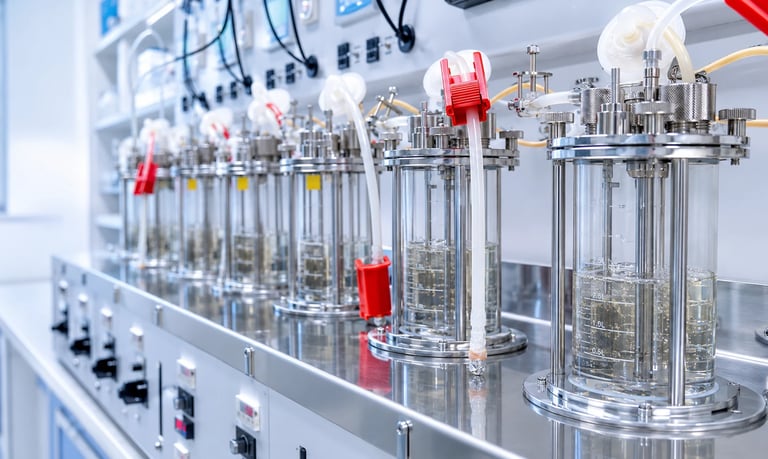
Learn how Kamoer KK350 peristaltic pumps support bioreactor and bioprocess systems for media feeding, pH adjustment, antifoam dosing, and fluid transfer.
Peristaltic Pump for Bioreactor Feeding, pH Control and Antifoam Dosing
In biotechnology and pharmaceutical manufacturing, bioreactors are essential systems for fermentation, cell culture, and controlled biological production. They are widely used in pharmaceutical, food, chemical, environmental, and life science applications to cultivate microorganisms or cells under carefully controlled process conditions.
Bioreactors can be used to support the production of antibiotics, enzymes, vaccines, vitamins, amino acids, organic acids, and other biological or metabolic products. To achieve stable and efficient bioprocess performance, the system must accurately control key parameters such as temperature, pH, dissolved oxygen, agitation speed, nutrient supply, and foam level.
Among these process steps, fluid transfer is a critical part of the overall system. Media feeding, acid and base addition, antifoam dosing, reagent transfer, and sampling all require reliable and controllable pump performance. A peristaltic pump is often used in bioreactor systems because it provides a clean fluid path, flexible tubing options, and convenient maintenance.
Kamoer KK350 peristaltic pump is designed to support controlled liquid transfer in laboratory, bioprocess, and OEM equipment applications. In bioreactor systems, it can be used for media feeding, pH adjustment, antifoam dosing, and other fluid transfer tasks where stable and repeatable delivery is required.
Fluid Transfer Requirements in Bioreactor Systems
A typical bioreactor process involves several key stages.
First, the culture medium is prepared and transferred into the reactor. The medium is usually sterilized before use to help maintain the required process environment.
Next, the activated microorganism seed or cell culture is inoculated into the bioreactor. During cultivation, the system continuously monitors and controls operating parameters such as temperature, pH, dissolved oxygen, and stirring speed.
As the culture grows, the process often requires dynamic adjustment. Nutrients may need to be added at specific times or at controlled rates. Acid or alkali solutions may be dosed to regulate pH. Antifoam agents may also be added to control foam formation during fermentation or cell culture.
These operations require pumps that can provide stable liquid delivery, flexible control, and good compatibility with the selected tubing and fluid path design.
Why Peristaltic Pumps Are Used in Bioreactors
A peristaltic pump transfers liquid by compressing flexible tubing with rotating rollers. The liquid stays inside the tubing and does not directly contact the pump head or mechanical parts.
This working principle makes peristaltic pumps suitable for many bioreactor and bioprocess applications.
Clean Fluid Path
Since the liquid only contacts the tubing, the fluid path is easier to manage. This is useful in applications where contamination control, fluid isolation, and maintenance convenience are important.
Easy Tube Replacement
Tubing is the main consumable part of a peristaltic pump. When the tubing needs to be replaced, the process is usually simpler than servicing internal wetted pump components.
Flexible Liquid Compatibility
Different tubing materials can be selected according to the liquid type, concentration, temperature, exposure time, and process requirements. Compatibility should always be verified under actual working conditions.
Suitable for Feeding and Dosing
Peristaltic pumps are well suited for controlled liquid addition, such as nutrient feeding, acid/base dosing, and antifoam addition. With proper calibration and control, they can support repeatable liquid delivery in bioreactor systems.
Kamoer KK350 Peristaltic Pump in Bioreactor Applications
The Kamoer KK350 peristaltic pump can be used as a fluid transfer component in bioreactor systems, laboratory fermentation platforms, and bioprocess equipment.
Its application value is mainly reflected in four areas:
1. Media and nutrient feeding 2. pH adjustment 3. Antifoam dosing 4. System integration and maintenance
By supporting controlled liquid transfer, the KK350 helps bioreactor users maintain more stable process conditions during fermentation or cell culture.
Application 1: Media Feeding and Nutrient Addition
During fermentation or cell culture, nutrients may need to be added continuously or intermittently. The feeding strategy can affect cell growth, product formation, and overall process stability.
A peristaltic pump can deliver medium, carbon source, nitrogen source, trace elements, or other liquid nutrients into the bioreactor according to the process requirements.
For media feeding applications, pump selection should consider:
- Required flow rate - Feeding mode: continuous or intermittent - Medium viscosity - Tubing material - Back pressure - Calibration method - Duty cycle - Maintenance frequency
The Kamoer KK350 peristaltic pump can support feeding applications where stable flow control and convenient tubing replacement are required.
Application 2: pH Adjustment
pH is one of the most important parameters in fermentation and cell culture. Even small deviations may affect microbial metabolism, cell growth, enzyme activity, or product yield.
Bioreactor systems commonly use acid and alkali solutions to adjust pH during the process. A pump is required to add these solutions accurately and repeatedly according to the pH control signal.
In this application, the peristaltic pump should provide:
- Reliable start-stop operation - Repeatable dosing volume - Suitable tubing compatibility with acid or alkali solution - Smooth integration with the control system - Stable performance during long cultivation cycles
Because acid and alkali compatibility depends on chemical concentration, temperature, and tubing material, actual application testing is recommended before final selection.
Application 3: Antifoam Dosing
Foam formation is common in fermentation and bioreactor processes. Excessive foam may interfere with gas exchange, sensor readings, reactor volume, and process stability.
Antifoam agents are often added when foam reaches a certain level. This process may be triggered manually or automatically by the bioreactor control system.
A peristaltic pump is suitable for antifoam dosing because it can deliver a controlled amount of liquid into the reactor. The pump should be able to start quickly, dose reliably, and stop accurately to avoid over-addition.
For antifoam applications, the user should evaluate:
- Antifoam viscosity - Required dosing volume - Tubing recovery performance - Pump speed range - Control signal compatibility - Long-term tubing wear
The Kamoer KK350 can be considered for antifoam dosing in laboratory and equipment integration scenarios where controlled liquid delivery is required.
Application 4: Process Sampling and Auxiliary Transfer
In addition to feeding, pH adjustment, and antifoam dosing, bioreactor systems may also require auxiliary liquid transfer steps.
These may include:
- Sample withdrawal - Buffer transfer - Reagent addition - Cleaning solution delivery - Waste liquid transfer
The final pump selection depends on the specific process layout and fluid characteristics. For applications involving sterile sampling or sensitive biological materials, the complete fluid path and tubing connection method should be evaluated carefully.
Technical Advantages of Kamoer KK350 Peristaltic Pump
1. Quick Tube Replacement for Easier Maintenance
Bioreactor applications may require tubing replacement due to maintenance, material compatibility, process changeover, or cleaning requirements.
The KK350 peristaltic pump supports convenient tube replacement, helping reduce maintenance time and improve system availability. This is especially useful for laboratory systems and bioprocess equipment where different liquids or process conditions may be used.
2. Stable Flow Control for Process Consistency
Fluid addition in a bioreactor should be consistent and controllable. Whether the pump is used for feeding, pH adjustment, or antifoam dosing, repeatable liquid delivery helps maintain stable process conditions.
The KK350 can support controlled liquid transfer when properly configured and calibrated. Actual flow performance depends on tubing size, pump speed, liquid viscosity, back pressure, and operating conditions.
3. Integrated Drive Design for Easier System Integration
For equipment manufacturers, pump integration is not only about flow rate. Installation space, wiring, control method, mounting direction, and maintenance access must also be considered.
The KK350’s integrated design helps simplify pump installation and system layout. This can be useful in compact bioreactor systems, laboratory instruments, and OEM bioprocess equipment where internal space is limited.
4. Multiple Tubing Options for Different Process Needs
Bioreactor applications may involve culture media, nutrient solutions, acid and alkali solutions, antifoam agents, buffers, or cleaning fluids. Different liquids may require different tubing materials.
The KK350 can be used with suitable tubing options according to the application requirements. Tubing selection should consider chemical compatibility, biocompatibility requirements, flexibility, tubing life, and sterilization or cleaning method.
Material compatibility should always be verified under actual concentration, temperature, pressure, and exposure time.
Key Selection Considerations
When selecting a peristaltic pump for a bioreactor system, users should evaluate the full process requirement instead of only checking the nominal flow range.
Important factors include:
- Required flow rate range - Liquid type and viscosity - Acid, alkali, or antifoam compatibility - Tubing material and size - Pressure or back pressure - Continuous or intermittent operation - Pump control method - Installation space - Tubing replacement convenience - Expected maintenance cycle - Integration with the bioreactor control system
For long-running fermentation or cell culture processes, it is recommended to test pump performance under actual operating conditions. Flow repeatability, tubing life, and chemical compatibility may vary according to the working environment.
Benefits for Bioreactor and Bioprocess Users
Using a Kamoer KK350 peristaltic pump in a bioreactor system can provide several practical benefits:
- Supports controlled feeding and dosing - Helps maintain stable pH adjustment processes - Enables automated antifoam addition - Provides a clean tubing-based fluid path - Simplifies maintenance through tube replacement - Supports compact equipment integration - Helps improve process automation and consistency
These benefits are valuable for laboratory research, fermentation development, pilot systems, and OEM bioprocess equipment.
Kamoer Fluid Transfer Solutions for Bioprocess Applications
Kamoer has extensive experience in fluid transfer applications for laboratory instruments, medical equipment, environmental monitoring systems, food and beverage equipment, and OEM automation systems.
For bioreactor and bioprocess applications, Kamoer provides micro peristaltic pumps, laboratory pumps, and customized fluid transfer solutions to support feeding, dosing, sampling, and process control.
The Kamoer KK350 peristaltic pump can help users build more reliable and convenient fluid transfer modules for fermentation, cell culture, and bioprocess control systems.
FAQ
1. Why are peristaltic pumps used in bioreactors?
Peristaltic pumps are commonly used because the liquid only contacts the tubing. This helps simplify fluid path management and makes tubing replacement easier.
2. What can the KK350 peristaltic pump do in a bioreactor?
Depending on system design, the KK350 can be used for media feeding, nutrient addition, pH adjustment, antifoam dosing, sampling, or auxiliary liquid transfer.
3. Can a peristaltic pump be used for acid and alkali dosing?
Yes, but tubing material compatibility must be verified according to the actual acid or alkali type, concentration, temperature, and exposure time.
4. Is the KK350 suitable for continuous operation?
Suitability for continuous operation depends on the actual duty cycle, pump speed, tubing material, back pressure, and process conditions. Application testing is recommended.
5. What affects dosing accuracy in a bioreactor pump?
Dosing accuracy may be affected by tubing size, pump speed, tubing elasticity, liquid viscosity, back pressure, calibration, and control method.
6. How should I choose tubing for bioreactor applications?
Tubing selection should consider fluid compatibility, biocompatibility requirements, sterilization or cleaning method, tubing life, flexibility, and pump head compatibility.
Looking for a Pump for Your Bioreactor System?
Kamoer provides peristaltic pump and fluid transfer solutions for bioreactor feeding, pH adjustment, antifoam dosing, sampling, and OEM bioprocess equipment.
If you are developing a bioreactor, fermentation system, cell culture platform, or laboratory fluid transfer module, Kamoer can help evaluate your flow rate, tubing material, liquid compatibility, control method, installation space, and customization requirements.
Contact Kamoer to discuss a suitable pump solution for your bioprocess application.
Related Stories
Kamoer Fluid Tech (Shanghai) Co., Ltd.
pump@kamoer.com