

OEM Micro Pump Testing Checklist Before Production
MICRO PUMP BASICS
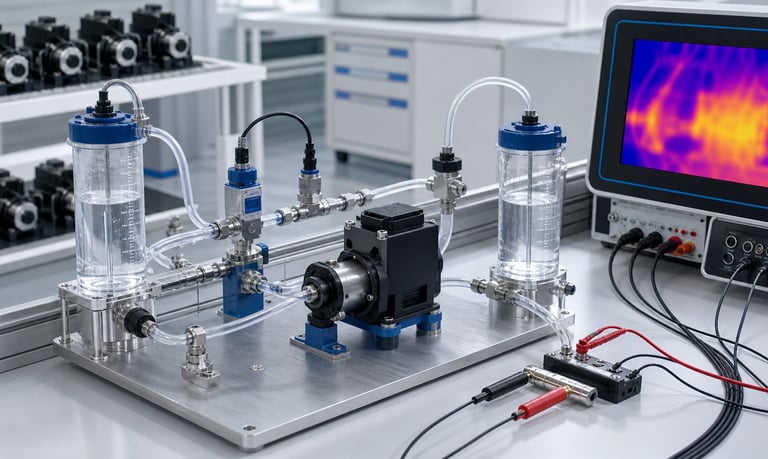
An OEM micro pump should be verified in the final fluid path, enclosure, control system, fluid, environmental range, duty cycle, cleaning process, and foreseeable fault conditions before production approval, with measurable acceptance criteria and traceable test records.
Peristaltic Pump for Automated Vaginal Secretion Analyzer
In vitro diagnostic, or IVD, instruments play an important role in modern clinical testing. By automating sample processing, reagent addition, reaction control, optical detection, washing, and waste handling, IVD analyzers help laboratories improve testing efficiency and reduce manual operation steps.
In gynecological diagnostics, vaginal secretion analysis is commonly used as a routine testing method. Automated vaginal secretion analyzers are designed to support the qualitative analysis of vaginal secretion samples and assist healthcare professionals in evaluating different types of genital tract infections, such as bacterial, fungal, trichomonas-related, and aerobic vaginitis-related conditions.
Inside this type of analyzer, stable and clean fluid transfer is essential. Sample dilution, reagent dosing, colorimetric reaction, tube transfer, tube washing, and waste liquid discharge all depend on reliable fluid control components. A compact peristaltic pump can be an effective solution for these fluid handling steps.
Kamoer KFS peristaltic pump is designed for compact liquid transfer and dosing applications in automated instruments. In an automated vaginal secretion analyzer, it can support sampling, cleaning, and waste liquid handling processes while helping reduce the risk of liquid contamination.
Fluid Handling Requirements in Vaginal Secretion Analyzers
An automated vaginal secretion analyzer usually involves several fluidic steps. Although system design varies by manufacturer, the typical workflow may include:
Sample dilution
Reagent addition
Sample and reagent mixing
Colorimetric or optical detection
Tube or cuvette transfer
Washing and cleaning
Waste liquid discharge
Each step requires stable liquid delivery and reliable pump performance. For diagnostic equipment manufacturers, the pump must match the analyzer’s fluid path, reagent characteristics, space constraints, control method, and maintenance requirements.
Common pump requirements include:
Compact size for instrument integration
Stable low-to-medium flow liquid transfer
Compatibility with selected tubing materials
Easy maintenance and tubing replacement
Low pulsation for smoother liquid delivery
Reliable start-stop performance
Clean fluid path design
Suitable control interface for automated operation
A peristaltic pump is often selected in IVD instruments because the liquid only contacts the tubing. This design helps simplify wetted material selection and makes the fluid path easier to replace or maintain.
Why Use a Peristaltic Pump in IVD Fluid Transfer?
A peristaltic pump works by compressing flexible tubing with rotating rollers. As the rollers move, liquid is pushed through the tube. Since the liquid remains inside the tubing, it does not directly contact the pump head, roller, or mechanical transmission parts.
This working principle provides several advantages for IVD equipment:
1. Isolated Fluid Path
The sample, reagent, cleaning fluid, or waste liquid only contacts the tubing. This is useful for applications where fluid isolation and contamination control are important.
2. Easy Tubing Replacement
Tubing is a consumable part in peristaltic pumps. When maintenance is required, replacing the tubing can restore the fluid path without replacing the whole pump.
3. Suitable for Automated Dosing
Peristaltic pumps can be driven by DC motors, stepper motors, or other control methods. In automated analyzers, stepper motor control can support more repeatable fluid delivery and precise start-stop operation.
4. Good Adaptability to Different Liquids
With proper tubing selection, peristaltic pumps can transfer many types of liquids, including water-like solutions, reagents, cleaning fluids, and certain viscous or sensitive liquids. Chemical compatibility should always be verified based on the actual liquid, concentration, temperature, and exposure time.
Kamoer KFS Peristaltic Pump in Automated Secretion Analysis Systems
In an automated vaginal secretion analyzer, the Kamoer KFS peristaltic pump can be used in different fluid handling positions depending on the system design.
One typical application is sample and reagent transfer. During the test process, the sample tube may go through dilution, reagent addition, reaction, and color comparison steps. The pump helps deliver liquid into the required reaction or processing area.
Another important application is cleaning and waste handling. After testing, the analyzer needs to discharge waste liquid and clean the inside and outside of the test tube or fluid path. In this process, the KFS peristaltic pump can work as a washing or waste liquid transfer pump to support automated cleaning.
The KFS peristaltic pump offers a flow rate range up to 65 mL/min, making it suitable for compact liquid transfer and washing processes in automated diagnostic equipment. Its low-pulsation performance also helps provide smoother liquid delivery in analyzer systems.
Application 1: Sample Transfer and Reagent Dosing
In automated secretion analysis, the instrument may need to add diluent, reagent, or reaction solution into a sample tube. Accurate and repeatable liquid delivery is important for maintaining test workflow consistency.
The KFS peristaltic pump can support this process by transferring liquid through pump tubing. Since the liquid only contacts the tubing, the fluid path is easier to manage compared with pump structures where liquid contacts multiple internal wetted parts.
For OEM instrument manufacturers, this can simplify system design, especially when the analyzer needs to handle different liquids in limited internal space.
Application 2: Tube Washing and Cleaning
After sample detection, residual liquid inside the tube or washing area must be removed and cleaned. In automated equipment, the cleaning process needs to be reliable, repeatable, and easy to control.
The KFS peristaltic pump can help deliver cleaning liquid or discharge waste liquid in the washing process. When integrated with the analyzer’s control system, the pump can start and stop automatically according to the instrument workflow.
This automated washing function helps reduce manual operation, improve processing efficiency, and support more consistent cleaning performance.
Application 3: Waste Liquid Handling
Waste liquid handling is another important part of diagnostic analyzer design. The pump must transfer waste liquid smoothly while helping reduce leakage and residual contamination risks.
A peristaltic pump is suitable for this type of application because the waste liquid stays inside the tubing. If the tubing is worn or needs replacement, maintenance can be performed by replacing the tube instead of cleaning complex internal pump chambers.
For IVD analyzers, this can improve service convenience and help keep the internal fluid system easier to manage.
Key Benefits for Diagnostic Equipment Manufacturers
Using the Kamoer KFS peristaltic pump in an automated vaginal secretion analyzer can provide several engineering benefits:
Clean Fluid Path
The liquid only contacts the pump tubing, helping reduce contamination risks and simplify fluid path management.
Compact Integration
The KFS pump is suitable for compact analyzer layouts where internal installation space is limited.
Automated Control
Stepper motor versions can support automated start-stop operation and more controlled liquid delivery.
Easy Maintenance
Pump tubing can be replaced as a consumable part, reducing maintenance complexity.
Low Pulsation
Low-pulsation liquid delivery helps improve fluid transfer stability in analyzer systems.
Suitable for Multiple Fluidic Steps
The pump can be used for sample transfer, reagent dosing, cleaning liquid delivery, or waste liquid discharge depending on the system configuration.
Selection Considerations
When selecting a peristaltic pump for an automated vaginal secretion analyzer, equipment manufacturers should evaluate the following factors:
Required flow rate
Liquid type and viscosity
Tubing material compatibility
Cleaning solution compatibility
Waste liquid characteristics
Duty cycle
Pump control method
Installation space
Tubing replacement method
Noise and vibration requirements
Long-term maintenance requirements
For diagnostic equipment, pump selection should be verified under the actual working conditions of the analyzer. Flow rate, tube life, reagent compatibility, and cleaning performance may vary depending on tubing material, pump speed, pressure condition, and operating cycle.
Kamoer Fluid Transfer Solutions for IVD Equipment
Kamoer has experience in fluid transfer applications for medical devices, IVD instruments, laboratory equipment, environmental monitoring systems, and OEM automation equipment.
For IVD analyzers, Kamoer provides micro peristaltic pumps, diaphragm liquid pumps, diaphragm gas pumps, and customized pump solutions for reagent transfer, sample handling, washing, suction, waste liquid discharge, and fluid control.
The KFS peristaltic pump can be used as a compact liquid transfer solution in automated vaginal secretion analyzers, helping equipment manufacturers improve automation efficiency, simplify fluid path maintenance, and support reliable liquid handling.
FAQ
1. Why are peristaltic pumps used in IVD analyzers?
Peristaltic pumps are often used in IVD analyzers because the liquid only contacts the tubing. This helps simplify fluid path management and makes maintenance easier.
2. What role does the KFS peristaltic pump play in a vaginal secretion analyzer?
Depending on the system design, the KFS pump can support sample transfer, reagent dosing, cleaning liquid delivery, tube washing, or waste liquid discharge.
3. Can the KFS peristaltic pump handle different reagents?
It depends on the tubing material and reagent characteristics. Compatibility should be verified based on actual chemical type, concentration, temperature, and exposure time.
4. Why is tube washing important in automated secretion analyzers?
Tube washing helps remove residual liquid after testing and supports the automated workflow of the analyzer. Reliable washing can reduce manual operation and improve testing efficiency.
5. What should be considered when selecting a pump for IVD equipment?
Key factors include flow rate, liquid compatibility, tubing material, pressure condition, control method, installation space, duty cycle, and maintenance requirements.
Looking for a Pump for Your IVD Analyzer?
Kamoer provides micro pump solutions for automated diagnostic equipment, including peristaltic pumps, diaphragm liquid pumps, diaphragm gas pumps, and customized OEM pump modules.
If you are developing a vaginal secretion analyzer or other IVD instrument, Kamoer can help evaluate your flow rate, reagent type, tubing material, control method, installation space, and integration requirements.
Contact Kamoer to discuss a suitable pump solution for your diagnostic equipment.
Related Stories
Kamoer Fluid Tech (Shanghai) Co., Ltd.
pump@kamoer.com